
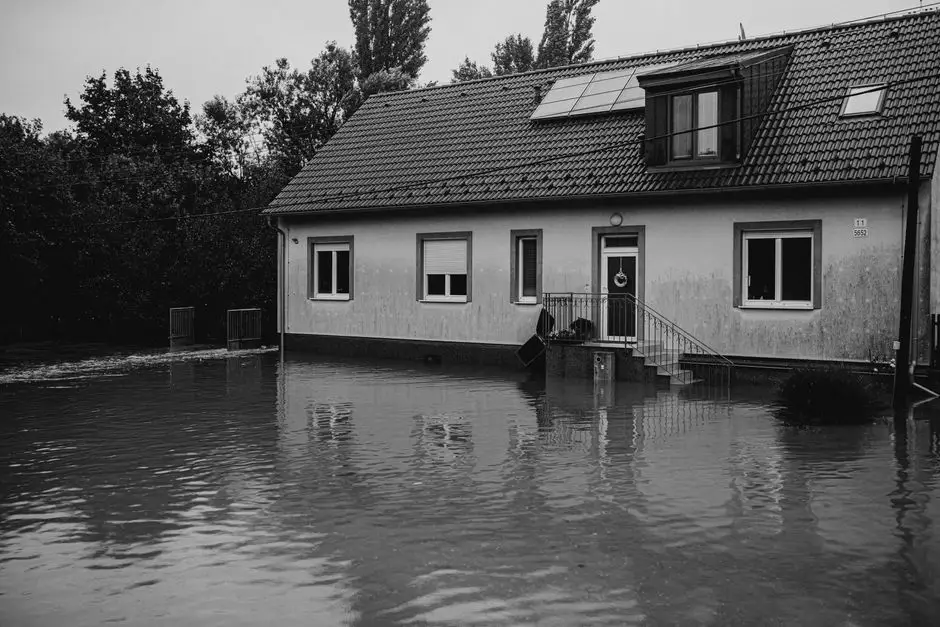
Water extraction is the physical removal of standing water from your home using pumps, vacuums, and weighted extraction tools. Water damage restoration is everything that happens after the water is gone - drying, sanitizing, repairing drywall, replacing flooring, and treating for mold. They are two separate phases of the same job, and almost every flooded Washington home needs both.
If you're staring at an inch of water in your basement right now, the answer is extraction first, restoration second. This post breaks down what each phase includes, what it costs in Washington in 2026, how long each one takes, and how to tell which one your situation actually calls for.
The short answer: extraction removes water, restoration repairs what it left behind
Water extraction vs water damage restoration in Washington comes down to a simple split: extraction is a mechanical process measured in hours, restoration is a repair and drying process measured in days. Extraction gets the bulk water out. Restoration gets your house back to normal.
Think of it like a flooded driveway. Extraction is the sump pump and the squeegee. Restoration is patching the cracked concrete and repainting the garage door the water warped. You can't skip the first step, and the first step alone doesn't finish the job.
Here's the definitional version: water extraction is the first-response service that removes standing water and saturated moisture from floors, carpets, and cavities using truck-mounted or portable extraction equipment. Water damage restoration is the follow-on service that dries structural materials, removes contaminated porous materials, and rebuilds whatever the water ruined.
Most homeowners in Washington who call us after a burst pipe or a backed-up drain need both. The rare exception is a small, clean-water spill - a toilet supply line that sprayed for two minutes onto a tile floor - where extraction plus a few fans handles it.
What water extraction actually involves
Washington water extraction services start with a moisture survey, not a mop. Before we pull a single gallon out, we map where the water went - under the baseboard, into the subfloor, behind the drywall, down into the crawl space.
Then the actual extraction. Depending on the volume and the surface, that means:
- Truck-mounted extraction for anything over about an inch of standing water - these units pull 10 to 20 gallons per minute and are the fastest way to clear a flooded basement.
- Portable extraction for tight spaces like closets, under sinks, and second-floor bathrooms where a truck can't reach.
- Weighted extraction for carpet and pad - a heavy roller head presses down while the vacuum pulls water up, recovering 90%+ of the moisture in carpet that hasn't delaminated.
- Specialty tools for hardwood (floor mats that suction through the seams), tile (a hard-surface wand), and cavities (a flood nozzle that fits behind baseboards).
Extraction is also where we make the first call on what's salvageable. Carpet pad soaked with Category 2 or Category 3 water - gray water from a washing machine or black water from a sewage backup - comes out and goes in the dumpster. It cannot be dried and reused. If you're dealing with that kind of contamination, our team handles Sewage Backup Cleanup in Washington with the PPE and disposal that job requires.
Once the standing water is gone, extraction is technically finished. But the structure is still wet. That's where restoration takes over.
What water damage restoration actually involves
Washington water damage restoration is the phase that decides whether your home smells like a basement or like a house six weeks from now. It starts the moment extraction ends and runs until moisture readings match a dry standard.
Restoration has four moving parts:
- Drying. We set air movers and dehumidifiers based on the square footage and the class of water loss. A typical 500-square-foot flooded room needs 5 to 7 air movers and one large LGR dehumidifier running 24/7 for 3 to 5 days.
- Monitoring. We take moisture readings daily - penetrating meters in the drywall, non-penetrating meters on the floor, thermo-hygrometers in the air. Drying is done when the readings match a dry standard for your area, not when the floor feels dry to the touch.
- Remediation. Any material that can't be dried - saturated drywall below the flood cut, warped hardwood, moldy insulation - gets removed and disposed of. We cut drywall 12 to 24 inches above the water line to expose the wall cavity.
- Reconstruction. New drywall, new baseboard, new flooring, paint, trim. This is the part most homeowners picture when they hear "restoration."
Restoration is also where mold prevention happens. Mold can start colonizing wet drywall in 24 to 48 hours in a humid Washington fall or winter. If your leak happened last week and you're just now calling, we treat the affected areas with an antimicrobial and, if mold has already taken hold, we scope a remediation plan before we rebuild anything.
For homes where the water came in through a failed roof or a storm-driven event, the restoration scope expands to include the exterior. That's a different job than a burst supply line, and it's why we run Storm Damage Restoration in Washington as its own service line with its own equipment.
How long does water extraction take in Washington?
Water extraction takes 2 to 6 hours for a typical residential loss in Washington - a flooded basement, a burst pipe in a kitchen wall, or a washing machine overflow. A small contained spill takes under an hour. A whole-floor loss with 2+ inches of standing water can run 8 to 12 hours with multiple technicians and truck-mounted units.
The variables that move the number:
- Volume of water. An inch across 800 square feet is roughly 500 gallons. That's a 2 to 3 hour extraction with a truck mount.
- Flooring type. Carpet and pad extract fast. Hardwood and tile take longer because water migrates into the subfloor and the seams.
- Access. A finished basement with a single stairwell is slower than an open slab. We run hose lines, not miracles.
- Category of water. Clean water (Category 1) is a straight extraction. Category 2 and 3 require containment and disposal, which adds time.
Restoration, by contrast, runs 3 to 7 days for drying alone, plus 1 to 3 weeks for reconstruction if drywall and flooring come out. So when someone asks "how long does water extraction take in Washington," the honest answer is: hours for the water, days for the dry, weeks for the rebuild.
Water extraction vs water damage restoration cost in Washington
Water extraction vs water damage restoration Washington cost breaks cleanly: extraction runs $500 to $2,500 for most homes, restoration runs $2,500 to $12,000+ depending on how much gets rebuilt. Typical 2026 pricing in the Puget Sound region sits in those ranges.
Here's how the numbers shake out:
- Water extraction only: $500 to $1,200 for a single room, $1,200 to $2,500 for a full basement or main floor. Includes the moisture survey, extraction, and initial equipment setup.
- Drying (part of restoration): $1,500 to $4,000 for a typical 500 to 1,000 square foot loss. Equipment rental, daily monitoring, and antimicrobial treatment.
- Reconstruction: $2,000 to $8,000+ depending on drywall, flooring, and cabinetry. A basement flood with carpet and drywall replacement lands around $4,000 to $6,000 in most Washington markets.
- Mold remediation, if needed: $1,500 to $6,000 on top, depending on the square footage affected.
Insurance usually covers the extraction and drying as part of a covered peril claim - burst pipe, appliance failure, storm-driven water intrusion. The reconstruction piece depends on your policy's dwelling coverage and your deductible. We document everything with photos, moisture logs, and a scope of work so your adjuster has what they need.
If you're in an older home - pre-1980 construction with galvanized supply lines or cast iron drains - the odds of a repeat event are higher. We see this constantly in neighborhoods across Tacoma water damage restoration where 1920s bungalows still have original plumbing behind the walls. A $600 extraction today beats a $9,000 restoration next spring.
Do you need extraction, restoration, or both?
You need extraction if there is standing water or saturated carpet. You need restoration if the water touched drywall, subfloor, cabinetry, or insulation - or if it sat for more than 24 hours. In practice, that means almost every real water loss needs both.
Run through this quick check:
- Extraction only: Clean water, contained to a hard surface (tile, vinyl, sealed concrete), under 10 gallons, cleaned up within an hour. A wet/dry shop vac and a fan can handle it.
- Extraction + drying (light restoration): Clean water on carpet, under 100 square feet, caught within a few hours. You need professional extraction and 2 to 3 days of air movers and a dehumidifier.
- Full restoration: Any water that reached the subfloor, the wall cavity, or the ceiling below. Any Category 2 or 3 water. Any loss that sat overnight. Any sign of mold, musty odor, or bubbling paint.
If you're not sure which bucket you're in, the moisture meter decides. We carry them on every truck. A floor that reads dry on top can be at 28% moisture content underneath - well above the 12% to 15% dry standard for most Washington homes.
Common mistakes homeowners make after a leak
The most expensive mistake after a Washington water leak is waiting. Water wicks into drywall at roughly one inch per hour, horizontally and vertically. A leak that starts at 8 a.m. has reached the top plate of a 8-foot wall by dinner.
Other mistakes we see on almost every job:
- Running a household fan and calling it dried. A box fan moves air. It does not remove moisture from the air, and it does not pull water out of a subfloor. Without a dehumidifier, you're just redistributing humidity into the rest of the house.
- Pulling up wet carpet and reinstalling the pad. Pad is a sponge. If it got wet with anything other than clean water, it's trash. Reinstalling it traps moisture under the carpet and grows mold within a week.
- Bleaching the visible mold and painting over it. Bleach kills surface mold. It does not kill the roots in the drywall paper or the studs. The mold comes back in 3 to 6 weeks, and now it's behind fresh paint.
- Filing the insurance claim before documenting. Take photos and video before anything gets moved or thrown out. Adjusters want to see the water line, the damaged materials, and the affected square footage.
- Assuming the leak is fixed because the water stopped. A pinhole in a copper line can weep for months before it bursts. If you don't find the source, you'll be doing this again.
One more: don't run your HVAC system to "dry things out." If mold spores are already present, you're spreading them through every duct in the house.
When to call a professional
Call a professional the moment water touches anything other than a sealed hard surface, or the moment you can't find the source. Those are the two lines. Everything else is judgment.
Specifically, call us if:
- Standing water covers more than a few square feet.
- The water came from a sewage backup, a washing machine, a dishwasher, or any source that isn't a clean supply line.
- You can smell musty air, or you see discoloration on drywall or baseboards.
- The leak is inside a wall or under a slab and you can't see the extent.
- The affected area is a basement or crawl space, where humidity and limited airflow make DIY drying almost impossible.
Water Damage Pros Washington handles both phases - extraction and restoration - under one roof, so you're not coordinating two contractors and waiting three days for the second one to show up. We extract, we dry, we rebuild, and we document the whole thing for your insurance claim. If you're in the Seattle metro or anywhere in the Puget Sound region, we can usually have a crew on site the same day you call.
Frequently Asked Questions
What is the difference between water extraction and water damage restoration in Washington?
Water extraction removes standing water using pumps and vacuums - it takes hours. Water damage restoration dries the structure and rebuilds damaged materials - it takes days to weeks. Extraction is step one; restoration is everything after.
Do I need water extraction or restoration in Washington?
You need extraction if there's standing water or soaked carpet. You need restoration if water reached drywall, subfloor, insulation, or cabinetry, or if it sat more than 24 hours. Most Washington water losses need both phases.
How much does water extraction cost in Washington?
Water extraction in Washington runs $500 to $1,200 for a single room and $1,200 to $2,500 for a full basement or main floor in 2026. Drying and reconstruction are separate line items, typically $1,500 to $8,000+ depending on scope.
How long does water extraction take in Washington?
Most residential extractions take 2 to 6 hours. A small contained spill is under an hour; a whole-floor loss with 2+ inches of standing water can run 8 to 12 hours. Drying afterward takes 3 to 5 days.
Does insurance cover water extraction in Washington?
Yes, for covered perils like burst pipes, appliance failures, and storm-driven water intrusion. Standard homeowners policies in Washington cover extraction and drying; reconstruction depends on your dwelling coverage. Flood damage from rising water requires separate flood insurance.
Get help with Water Damage in Washington
Whether you need a two-hour extraction or a full restoration with new drywall and flooring, we handle both phases with the same crew and the same documentation. Call Water Damage Pros Washington at (855) 516-3683 and we'll tell you exactly what your situation needs - extraction, restoration, or both.