
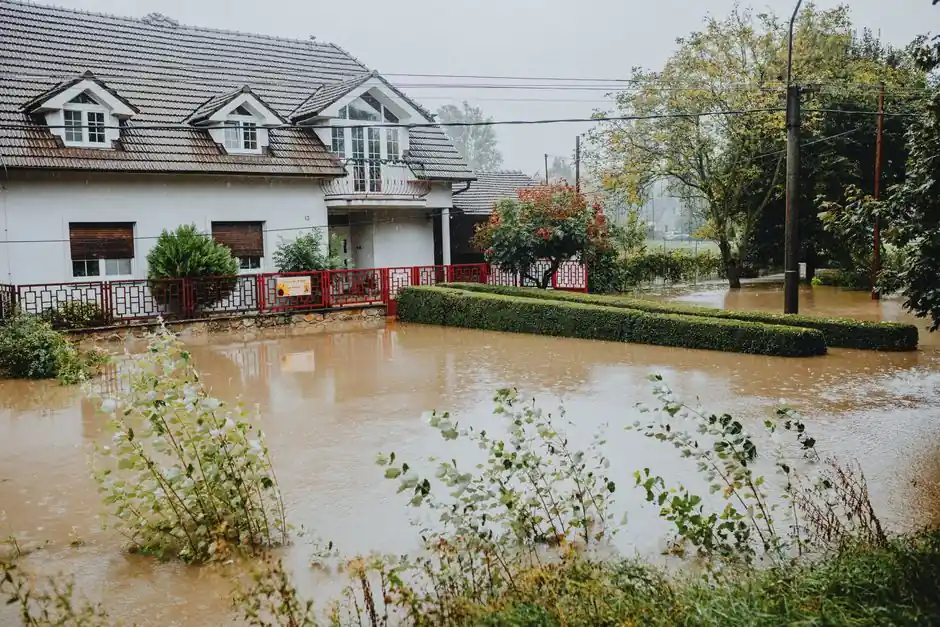
Cleaning up a sewage backup in your basement safely means one thing above all: you never touch the water or the solids with bare skin, and you treat every item the water touched as contaminated until it is disinfected or thrown out. Sewage carries E. coli, salmonella, hepatitis A, and parasites, and in a Washington basement it also soaks into drywall, insulation, and framing that stay wet for weeks. This guide walks you through the safe order of operations, what to throw away, how drying actually works, and when the job is too big for a shop vac and a pair of rubber gloves.
Why sewage backup is a health hazard, not just a mess
Sewage backup cleanup in Washington is classified as Category 3 water damage, which is the industry term for water that is grossly contaminated. That classification matters because it changes the rules. Category 1 is a clean supply line leak. Category 2 is washing machine discharge or a toilet overflow with no solids. Category 3 is raw sewage, and anything it touches has to be handled as biohazard material.
The health risks are real and not theoretical. A single gram of sewage can carry millions of bacteria, and the viruses in it survive on wet drywall for days. The most common illnesses we hear about after a backup are gastrointestinal, but skin infections and respiratory issues from airborne mold are just as common when a basement stays damp.
People with asthma, young children, pregnant women, and anyone over 60 should stay out of the basement entirely until the space is cleaned and dried. That is not a suggestion. It is the first decision you make.
What to do in the first 30 minutes
The first 30 minutes after you notice a basement sewage backup in Washington set the tone for the whole cleanup. Move fast, but move in the right order.
- Get everyone out of the basement. Pets included. Shut the door behind you.
- Stop the source if you can. Do not flush toilets, run sinks, or use the washing machine. If you have a backwater valve, close it.
- Kill the power to the basement. Only if you can reach the breaker panel without stepping in water. If the panel is in the flooded area, call an electrician first.
- Open windows and run a fan in the stairwell, not in the flooded room. You want cross-ventilation, not sewage aerosol blowing into the rest of the house.
- Put on the right gear before you go back down. Rubber boots, nitrile gloves, N95 or P100 respirator, eye protection, and clothes you are willing to throw away.
If the water is deeper than an inch or two, or if it is still rising, stop. That is a call-the-pro situation, and it is the point where most homeowners in the area reach for Emergency Water Removal in Washington rather than a wet/dry vac.
How do I clean up sewage backup in my Washington basement safely?
You clean it up in five stages: remove standing water, remove contaminated materials, disinfect hard surfaces, dry the structure, and verify the moisture is gone. Skipping the drying stage is the number one reason basements smell musty three months later.
Stage 1: Remove the standing water
Pump or vacuum the water out in stages. Do not drain a full basement in one shot, especially if the ground outside is still saturated. Rapid removal can cause the walls to shift. A wet/dry vac handles small puddles; anything over a couple of inches needs a submersible pump or a truck-mounted extractor.
Every gallon of sewage water you pull out weighs about 8.3 pounds. A 1,000-square-foot basement with two inches of water is holding roughly 10,000 pounds of contaminated liquid. That is why professional Water Extraction in Washington uses truck-mounted units that move 15 to 25 gallons per minute.
Stage 2: Remove contaminated materials
Anything porous that touched the sewage water comes out. That includes carpet and pad, drywall up to at least 12 inches above the water line (often 24 inches), fiberglass insulation, cardboard boxes, particle board, and any upholstered furniture.
Cut drywall with a utility knife and score it cleanly. Bag everything in 6-mil contractor bags. Do not stack wet bags in your garage for a week. Haul them out the same day.
Stage 3: Disinfect hard surfaces
Concrete floors, floor drains, studs, and block walls get scrubbed with a disinfectant rated for Category 3 water. A 1:10 bleach-to-water mix works on bare concrete, but it corrodes metal fasteners and is not safe on every surface. Quaternary ammonium or hydrogen peroxide-based disinfectants are gentler and just as effective.
Scrub, let the disinfectant sit for the contact time on the label (usually 10 minutes), then rinse and repeat. One pass is not enough on a concrete floor with a rough finish.
Stage 4: Dry the structure
Air movers and dehumidifiers run for 3 to 5 days in a typical Washington basement. We set a dehumidifier to hold the space at 30 to 50 percent relative humidity and check moisture readings in the framing every 24 hours. A dry-looking floor is not a dry floor.
Stage 5: Verify
Before you rebuild anything, take pin-type moisture readings in the studs and the slab. If the wood is above 16 percent moisture content, you are not done. Rebuilding over damp framing traps moisture and grows mold behind the new drywall.
What you can safely throw away and what you cannot
When in doubt, throw it out. That is the rule with Category 3 water, and it saves you from a mold problem six weeks from now.
- Throw away: carpet, carpet pad, drywall, insulation, cardboard, paper, mattresses, upholstered furniture, stuffed toys, particle board shelving, and any food that was in the room.
- Can often be saved: solid wood furniture (scrubbed and disinfected), metal shelving, glass, hard plastic totes, and concrete or tile floors.
- Call a pro before deciding: anything with sentimental or high value, and any structural wood that is still solid but wet.
If the backup came from a storm drain or a municipal line, the rules get stricter. That is a flood damage situation, and the cleanup scope is different. Our team handles Flood Damage Restoration in Washington for exactly these calls, and the first step is always the same: contain the contamination before it spreads.
Drying the basement: why fans alone are not enough
A box fan and an open window will not dry a Washington basement after a sewage backup. Fans move air, but they do not remove moisture from the air. Without a dehumidifier, you are just circulating damp air through the same wet space.
The math matters. A 1,000-square-foot basement with wet drywall and a damp slab can release 15 to 30 gallons of water vapor per day for the first 48 hours. A residential dehumidifier pulls 30 to 70 pints per day. That is why professional drying uses commercial LGR dehumidifiers rated at 100 to 150 pints per day, plus one air mover for every 10 to 16 linear feet of wall.
We also check the crawl space. Water wicks sideways under a slab and shows up in the crawl space days later. If you have one, our Crawl Space Water Removal in Washington service handles the extraction and drying so the whole foundation dries at the same rate.
Common mistakes we see on sewage backup calls
We have walked into hundreds of basements across Washington after a backup, and the same mistakes show up over and over.
- Using a household shop vac without a HEPA filter. You aerosolize bacteria into the air you are breathing.
- Running the HVAC system. That pulls sewage-contaminated air through every duct in the house.
- Bleaching the floor and calling it done. Bleach does not penetrate concrete. The bacteria in the pores survive.
- Skipping the moisture check before rebuilding. New drywall over wet studs is a mold farm.
- Waiting on the insurance call. You can and should start emergency mitigation before the adjuster arrives. Most policies require it.
- Assuming the backup was a one-time thing. In older Washington neighborhoods, root intrusion and aging clay laterals cause repeat backups every 12 to 24 months until the line is replaced.
That last one is the expensive mistake. A single backup cleanup is a few thousand dollars. A collapsed sewer lateral under your front yard is a five-figure repair. If you have had two backups in two years, get the line scoped before you clean up again.
When to call a professional
Call a professional the moment any of these are true: the water is more than an inch deep, the backup involved solids, the affected area is larger than about 100 square feet, the water reached drywall or insulation, or anyone in the house has a compromised immune system.
We also get called when a homeowner starts the cleanup and realizes halfway through that the smell is not going away. That is usually a sign the contamination went further than it looked. Water Damage Pros Washington handles sewage backup cleanup, extraction, drying, and the rebuild that follows, and we work directly with your insurance adjuster so you are not translating between two contractors.
One more thing worth knowing: if your backup came from a failed pipe rather than the main line, the cleanup scope is different. Our Pipe Burst Cleanup in Washington team handles the water side while a licensed plumber handles the repair.
Frequently Asked Questions
How do I clean up sewage backup in my Washington basement safely?
Wear rubber boots, nitrile gloves, eye protection, and an N95 respirator. Remove standing water with a pump or extractor, cut out all porous materials that touched the water, disinfect hard surfaces with a Category 3-rated product, then dry the structure for 3 to 5 days with air movers and a commercial dehumidifier. Verify moisture before rebuilding.
How much does sewage backup cleanup cost in Washington?
Typical 2026 pricing in Washington runs $1,800 to $4,500 for a small basement, $4,500 to $9,000 for a mid-size finished basement, and $9,000 to $20,000 or more when the rebuild is included. Emergency after-hours calls add 15 to 30 percent. Most of the cost is labor, disposal, and drying equipment rental.
Does insurance cover sewage backup in Washington?
Standard homeowners policies usually exclude sewage backup unless you added a sewer backup endorsement, which typically costs $50 to $150 per year and covers $5,000 to $25,000. Flood insurance through NFIP does not cover sewer backup. Check your declarations page for the endorsement before you file.
Who do I call for sewage backup in Washington?
Call a licensed water damage restoration company first, then your insurance company. If the backup is still active or the main line is blocked, call a licensed plumber to clear the line. Water Damage Pros Washington handles the cleanup, drying, and rebuild side of the job.
What are the health risks of sewage backup in Washington?
Raw sewage carries E. coli, salmonella, hepatitis A, norovirus, and parasites. Exposure causes gastrointestinal illness, skin infections, and respiratory problems. Airborne mold from a basement that stays wet more than 48 hours is the second wave of risk. Children, seniors, and anyone immunocompromised should stay out until the space is fully cleaned and dried.
Get help with Water Damage in Washington
If the backup is still active, the water is deeper than an inch, or you have already thrown out three bags of carpet and the smell is not fading, stop and let us take it from here. We handle the extraction, the disinfection, the drying, and the rebuild, and we work with your adjuster from the first call.
Call Water Damage Pros Washington at (855) 516-3683. We answer 24/7, and we can be at your basement the same day across the Puget Sound region.